
Stop Guessing. Start Getting Good: The 5 Stats That Actually Matter.
You don't need a swing coach. You need a reality check.
Most beginners think the path to lower scores is paved with $600 drivers and "one secret tip" from a YouTube pro who hasn't topped a ball since the nineties. Spoiler alert: It isn't.
At Birdie Lab, we believe data is the only thing that doesn't lie to you after three beers at the 19th hole. If you want to stop sucking and start scoring, you need to track the "Truth." Here are the five metrics that will actually move the needle.
1. Fairway Consistency (The "Stay Out of the Trees" Metric)
What it actually is
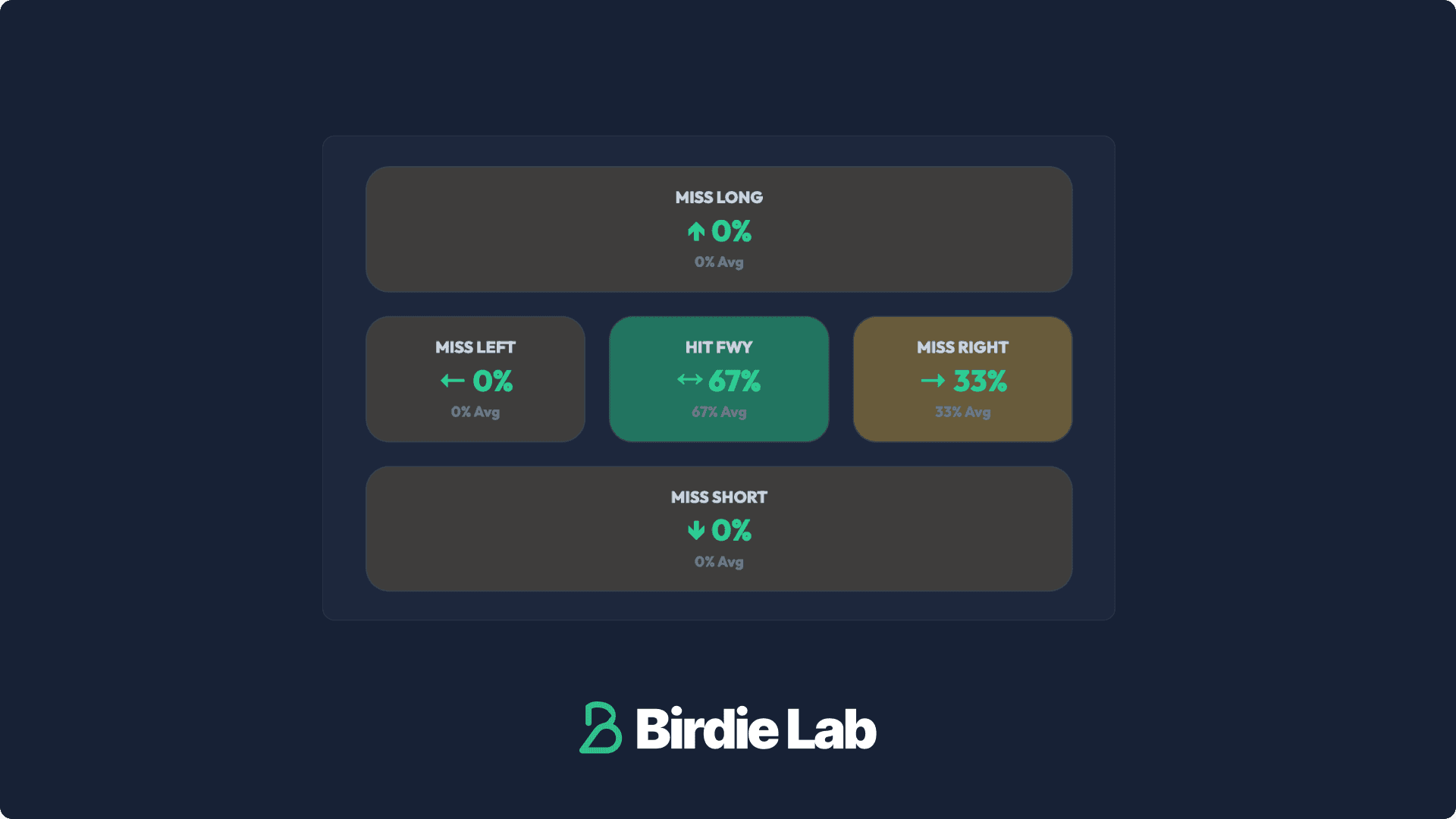
We track how often your tee shot on a Par 4 or 5 actually finds the short stuff. In the Birdie Lab Dashboard, we call this Fairway Consistency.
Why distance is a trap
For beginners, "bombing it" usually means "bombing it into the neighbor's swimming pool." Missing the fairway leads to the "Triple Threat of Sadness":
The dreaded punch-out.
Lost balls (and your dignity).
Instant Penalty Strokes.
FIX MY DRIVING: Use our Driving Miss Patterns in The Lab to see if you’re always missing right. Aim left. Math is magic.
2. Greens in Regulation (GIR)
The math of the pros
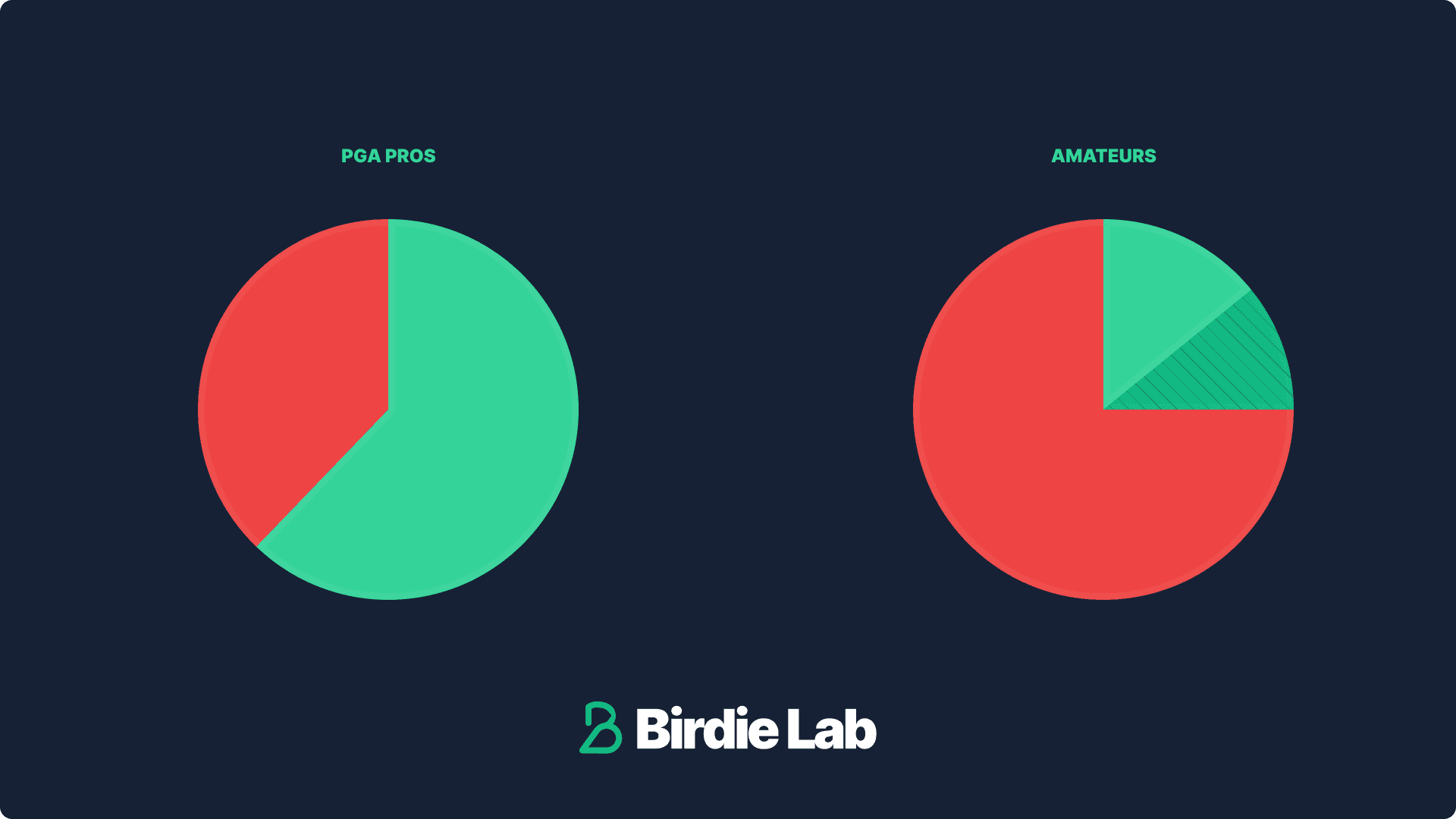
You hit a GIR when your ball is on the putting surface in two shots under par (e.g., on the green in 2 shots on a Par 4).
Reality check for the rest of us
PGA Tour players hit about 65% of greens. If you're a beginner, aiming for 15–25% is a massive win. GIR is the ultimate "Truth" metric—it tells you if your approach shots are actually functional or just expensive grass-cutting exercises.
3. Putts Per Hole (The "Silent Killer")
What this reveals
Total putts per round are okay, but Putts Per Hole (found in your Birdie Lab Dashboard) tells the real story. If you’re averaging 2.5 putts per hole, you’re essentially handing strokes back to the course like a philanthropist.
The Benchmark
Beginner Status: 2.0 - 2.3 putts per hole.
The "I’m Getting Good" Goal: 1.8 putts per hole.
SEE THE DAMAGE: Check your Putting Distribution in The Lab to see how many three-putts are ruining your life.
4. Scrambling % (Your Get-Out-of-Jail-Free Card)
Short game recovery
Scrambling is how often you save par after missing the green in regulation. It’s the difference between a "good" miss and a "I’m never playing this game again" blow-up hole.
Why it lowers scores fast
Beginners miss greens. A lot. If you can chip it close and two-putt, you stop the bleeding. Birdie Lab tracks your Scrambling Success so you know if your wedge play is a weapon or a liability.
5. Penalty Strokes (The Ego Check)
Why they happen
Trying to "hero" a shot through a gap the size of a needle.
Ignoring the water hazard because "I feel lucky."
The fastest way to break 100
Penalty strokes are the quickest way to inflate your score. When you track them in Birdie Lab, you’ll realize that laying up is actually the smartest thing you can do. Our Discipline Score in the radar profile tells you exactly how much your ego is costing you.
Stop playing "Guesswork Golf"
Manual scorecards are fine if you enjoy doing homework on a Saturday. But if you want instant insights, Birdie Lab makes it stupidly simple:
LOG IT: Use our Manual Round Form or Scorecard CSV Import.
SEE IT: The Dashboard gives you the "A-ha!" moments instantly.
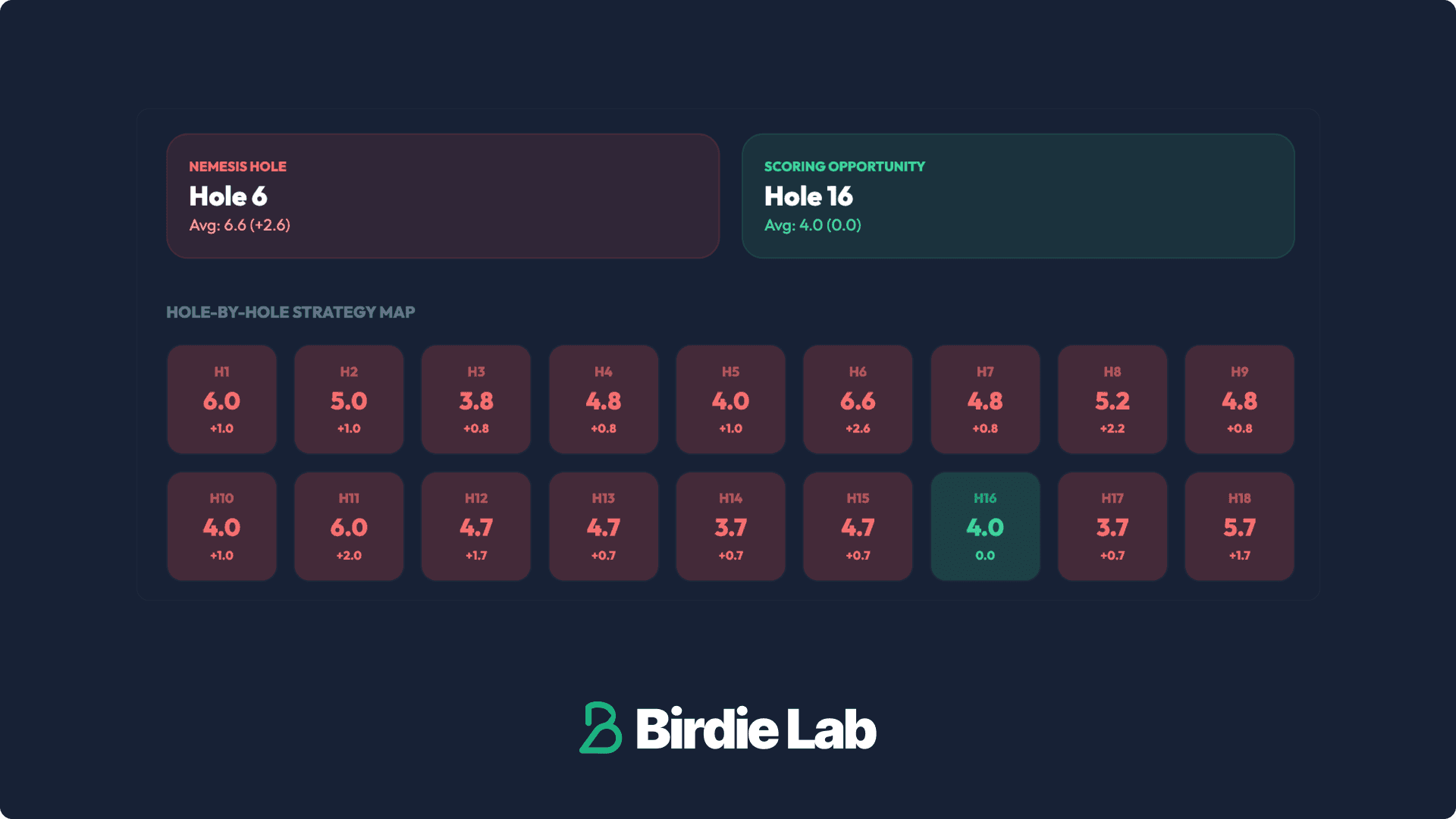
FIX IT: Use The Lab to identify your "Nemesis Hole" and build a strategy that works.
Common rookie mistakes to avoid:
Tracking 50 stats: Stick to the Big 5.
Comparing yourself to Rory: He’s better than you. It’s fine.
Ignoring the trends: One bad round is a fluke. Ten bad rounds is a pattern.
Conclusion: Play Smarter. Not Harder.
Improvement isn't about being perfect; it's about being aware. By focusing on these five metrics, you’ll gain the confidence to play better golf without the frustration.